Showing posts with label 1957. Show all posts
Showing posts with label 1957. Show all posts
Sunday, March 6, 2022
Jazz For Playboys


Friday, October 25, 2013
The Gems - Monkey Faced Baby

She got hair on her face, built like a Missouri mule.... And i love her yes i do....
The Gems - Monkey Faced Baby
Monday, January 7, 2013
The Mints - Night AIr

PS - I've just about had it with DivShare so i am trying out MediaFire because DivShare eats shit.
PSS - I guess mediafire bites too..... ugh.
PSSS - Back to divshare....... ugh.
The Mints - Night AIr
Wednesday, December 12, 2012
Rod Willis - Old Man Mose - Sombody's Been Rocking My Baby
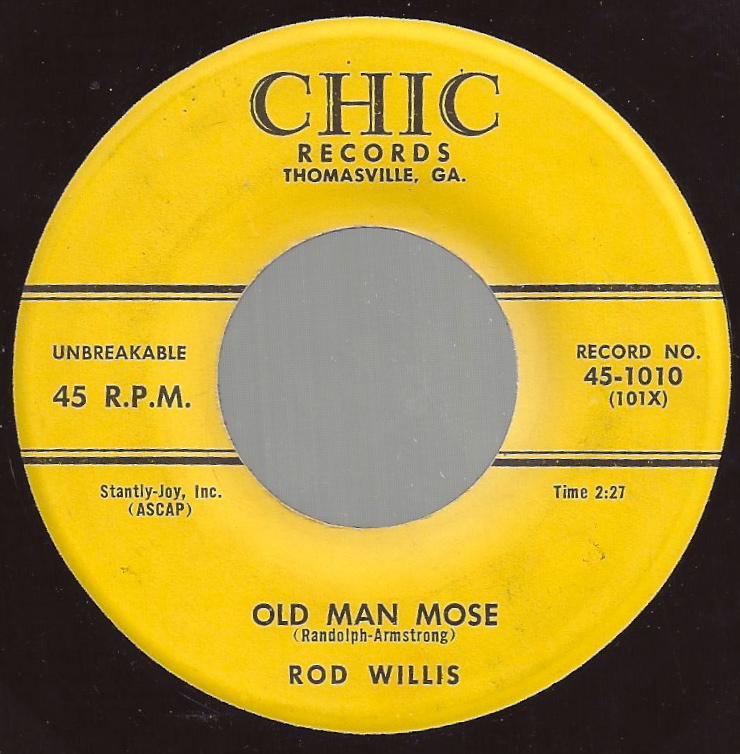

Rod Willis - Old Man Mose
Rod Willis - Sombody's Been Rocking My Baby
Thursday, October 18, 2012
The Cadillacs - Broken Heart - My Girl Friend

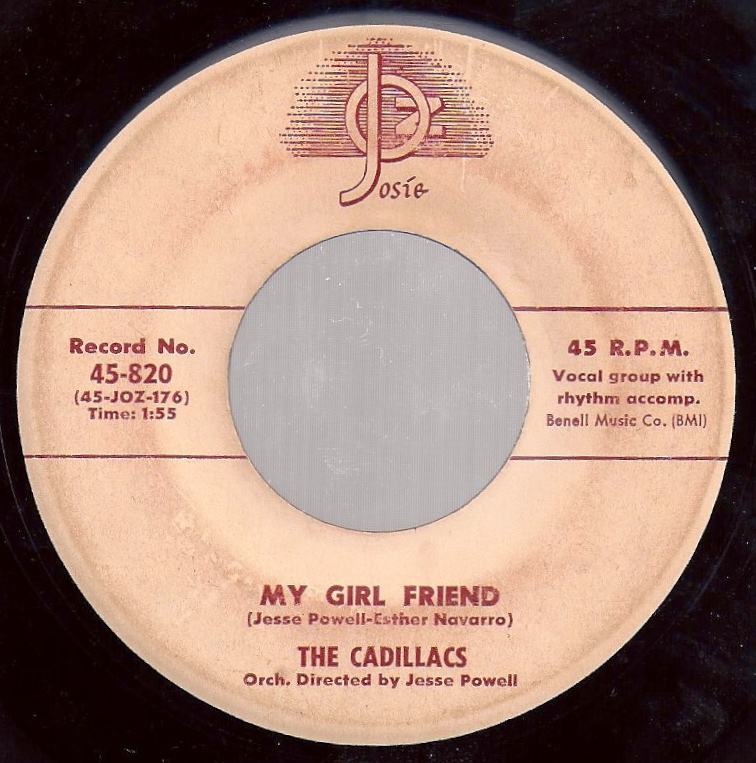
As for The Cadillacs, here is the wiki info:
The Cadillacs were an American rock and roll and doo-wop group from Harlem, New York; active from 1953 to 1962. The group was noted for their 1955 hit "Speedoo", which was instrumental in attracting White audiences to Black rock and roll performers.
The group came together as The Carnations in 1953, with members Earl Carroll (lead vocalist), Bobby Phillips, Lavern Drake (bass vocalist), and Gus Willingham. As the group moved into the recording studios, James "Poppa" Clark was added as a fifth member, and the name "The Cadillacs" was given to them. The group's first recording came in July 1954, with Josie Records #765, featuring Gloria and Wonder Why.
In 1955, Willingham and Clark left the group and were replaced by Earl Wade and Charles Brooks. At this time, the group first began to experiment with choreography, suggested by manager Esther Navarro. Later that year came the group's biggest hit, "Speedoo", Carroll's nickname. Lavern Drake left the group in 1956 and was replaced by J. R. Bailey.
In 1957, differences in opinion caused the group to split. One group was initially known as The Four Cadillacs, with current bass J. R. Bailey, former bass Lavern Drake, and new members Roland Martinez and Bobby Spencer. The previous year, Bobby Spencer had written the "My Boy Lollipop" pop song shuffle for Barbie Gaye, which was played by Alan Freed and secured Barbie Gaye a spot in his 1956 Christmas Show opening for Little Richard. In 1964, an Ernest Ranglin produced ska version of the she song became a multi-million seller for Jamaican teenager Millie Small and made producer Chris Blackwell rich, leading to further development of his Island Records label.
The other four current members - Carroll, Wade, Brooks, and Phillips - continued recording separately, later as Earl Carroll and the Cadillacs. Bailey's group also included former group saxophonist Jesse "Tex" Powell, and recorded in early 1958 as Jesse Powell and the Caddys. Both groups recorded simultaneously on Josie Records. Later in 1958, the groups combined back into one. Carroll's backup vocalists, Wade, Brooks, and Phillips, all decided to retire and Carroll joined Bailey, Drake, Martinez and Spencer. Carroll's lead spot had been given to Spencer and Bailey, and he left shortly thereafter, creating a new group, Speedo and the Pearls, which recorded briefly in 1959. In 1959, the Cadillacs are also featured in the movie Go Johnny, Go
The group split and re-formed in 1960, with Carroll, Martinez, Kirk Davis, and bass Ronnie Bright. Later the group was Carroll, Martinez, the returning Bobby Spencer, Milton Love, and Reggie Barnes. Martinez, Love and Barnes were all members of The Solitares at one time.
In 1961, the group began to resemble The Coasters in their music. The lineup shifted again, now with Carroll, Martinez, Curtis Williams, Ray Brewster, and Irving Lee Gail. Carroll was out by 1963 to enter the group they'd been emulating, The Coasters, with Carl Gardner, Billy Guy, and former Cadillac Ronnie Bright. 1963 also ended the group's run on Josie Records.
Brewster and Martinez brought in former members Bobby Spencer and J. R. Bailey and continued to record through 1963. The group split, with Bailey joining the Jive Five. Brewster brought in former Cadillac/Solitare Milton Love with Solitares Bobby Baylor and Fred Barksdale. This group recorded briefly in 1964. Spencer became lead vocalist, with Joey Levine (Ohio Express, Reunion) as backing vocalist, for Crazy Elephant, a bubblegum music group, in 1969.
The Cadillacs were back in 1970 with J. R. Bailey, Bobby Spencer, original member Bobby Phillips (who had retired from Speedo's group during the split), and new member Leroy Binns, of The Charts. Steven Brown later replaced Phillips. Teddy Pendergrass came on as the groups drummer. The group split into the mid 1970s and some members joined Herold Melvin and the Bluenotes, including Teddy Pendergrass as drummer. In 1979 Earl Carroll, Earl Wade, Bobby Phillips, and Johnny Brown came together for a Subaru commercial.
The Cadillacs - Broken Heart
The Cadillacs - My Girl Friend
Monday, January 2, 2012
The Colts - Shiek Of Araby - Guiding Angel


The Colts is one of two black vocal groups that came out of Bakersfield, California (the other group was The Paradons of "Diamonds and Pearls" fame). Lead singer Ruben Grundy, his brother Joe Grundy, and Carl Moland lived on the same street in Bakersfield. When the three moved to Los Angeles to attend L.A. City College, they put together a vocal group with fellow student Leroy Smith, who came from New Jersey. (Love all things Jersey!)
Read more HERE:
The Colts - Shiek Of Araby
The Colts - Guiding Angel
Monday, November 14, 2011
Carol Jarvis - Rebel
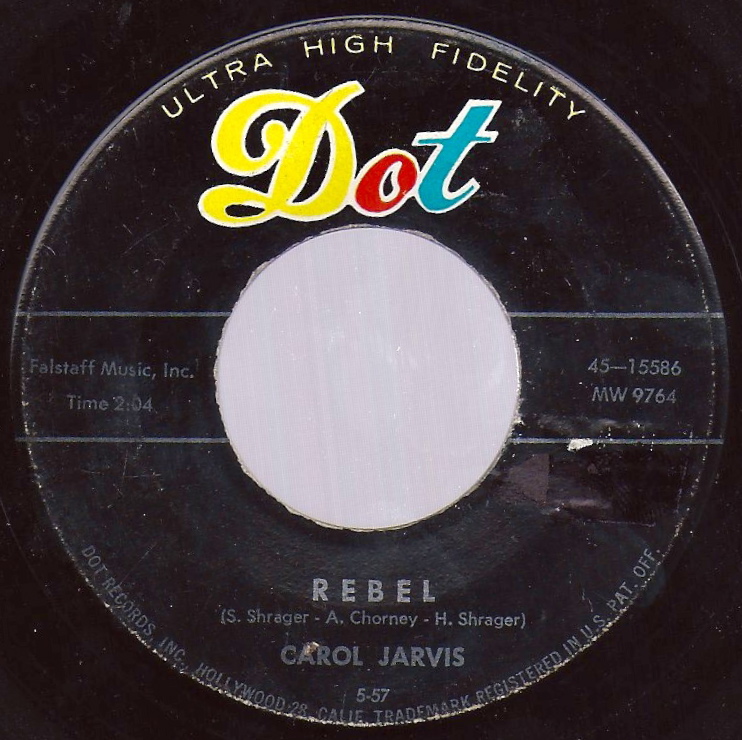
He's different, yes, different
From others I know
They call him a rebel
But I love him so
He's got ways about him
I don't understand
And yet he's no rebel
When he takes my hand
My friends say I'm foolish
That he's not my kind
But his tender kisses
Have made up my mind
He's different, so different
I'll have to agree
But though he's a rebel
He's just right for me
My friends say I'm foolish
That he's not my kind
But his tender kisses
Have made up my mind
He's different, so different
I'll have to agree
But though he's a rebel
He's just right for me
1957.
Carol Jarvis - Rebel
Friday, November 11, 2011
The Valiants (Bumps Blackwell Band) - Good Golly Miss Molly

"Good Golly Miss Molly" is a hit rock 'n' roll song first recorded in 1958 by the American musician Little Richard. The song, a 12-bar blues, was written by John Marascalco and producer Robert "Bumps" Blackwell. Although it was first recorded by Little Richard, Blackwell produced another version by The Valiants, who imitated Little Richard, but sang the song even faster. Although the Valiants' version was released first, Little Richard had the hit. Like all his early hits, it quickly became a rock 'n' roll standard and has subsequently been covered by hundreds of artists. The song is ranked #94 on the Rolling Stone magazine's list of The 500 Greatest Songs of All Time.
The Valiants (Bumps Blackwell Band) - Good Golly Miss Molly
Wednesday, September 21, 2011
The Norman Fox and The Rob-Roys - Audrey - Tell Me Why


Classic Doo-Wop from 1957.
Red more about The Rob-Roys HERE:
The Rob-Roys - Audrey
The Rob-Roys - Tell Me Why
Monday, September 19, 2011
Nick Greene - My Lovin' Baby

RARE! Hot rockabilly 45 with scorching guitar. Comped on Bear Family's "Drugstore's Rockin". (That tag stole from an ebay auction)
Looks like this has been comped a bunch of times and rightly so as this is a pretty "hot" rockin' number. Looks like this is from 1957. Dig it greasers!
Nick Greene - My Lovin' Baby
Wednesday, June 1, 2011
Jess Du Boy and The Hitch-Hikers - Beautiful Love

The man behind the WOO-HOO, WOO-HOO-HOO from the Rock-A-Teens! This song was a few years prior to Jess hooking up w/ the Rock-A-Teens. And is a good one all on its own, but obviously never attained Woo-Hoo status...
You can read the whole tale HERE:
Jess Du Boy and The Hitch-Hikers - Beautiful Love
Friday, April 29, 2011
Chuck And Chuckles - Bury The Hatchet

Bury the hatchet, RIGHT IN YOUR HEAD!!!
Gary Paxton and Skip Battin recorded some material for the Shad label in 1957. Not sure what to call themselves they changed their name for every release. One of these releases named the artists as CHUCK & THE CHUCKLES...
Chuck And Chuckles - Bury The Hatchet
Monday, March 14, 2011
Johnny Horton - Long Way Home Tonight

Most of Mr. Horton's stuff i can do without, but for a while there in the late 50's he was rockin and boppin with the best of them. Lots of folks tried their hand at Rock and Roll after it went big time. This track and Honky Tonk Hardwood Floor being my 2 faves from Johnny.
Johnny Horton - Long Way Home Tonight
Saturday, August 7, 2010
Jimmy Dee - Henrietta - Don't Cry No More

Hello people just a really quick one today to fire up this Saturday where finally the heat is breaking up on the East Coast. I'm gonna pound down some coffee and mow the lawn.... But here is a cool little firecracker to start your Saturday off right!
Henrietta is a great little rolling roackabilly number that gets pretty manic and it's flip another nice rocker from Jimmy Dee. The flip has a little Ronnie Self vibe at least to my ears. And dig that out of tune guitar break! I Think the year here is 1957 or 58.
Jimmy Dee, San Antonio, Texas musician and singer hit 47 on the Billboard Top 50 early in 1958 with the song Henrietta, a rockabilly style early rock 'n' roll song. He appeared on Dick Clark's American Bandstand TV program during December, 1957.
He was born in May of 1944 and by 1956 had become a club attraction in lounges near San Antonio. His discography is difficult to assemble as he recorded for eleven different labels during the years spanning 1957-1965.
It is known that he was a member of the backing group for the Verve recording artist Sharon Wynter and toured with her but did not sing on any of her recordings. It is reported that he married her sister in 1967.
He worked as a studio musician in both Memphis and Nashville, Tennessee during the early sixties. He is also credited on one of Del Shannon's tracks "Tell Her No", 1965, on drums and back-up vocals. It is thought that he may have toured with Shannon as his drummer.
http://www.rockabillyhall.com/JimmyDee.html
Jimmy Dee - Henrietta
Jimmy Dee - Don't Cry No More
Monday, March 22, 2010
Betty Reilly - The Saga of Elvis Presley


A novelty cover song of another classic. Stranded in the Jungle by the Jayhawks latter done by The Cadets who had the hit with it. I bought this record not knowing anything about it or that this song was kind of a cover of the great stranded in the jungle. But for a few bucks and a song title called "the saga of Elvis Presley" how could i NOT take a chance. And while this sin't the greatest thing since sliced bread it has a certain limited charm.
Betty Reilly - The Saga of Elvis Presley
Monday, May 25, 2009
Storey Sisters - Bad Motorcycle

Something to start your work week, a female rocker from 1957 here by The Storey Sisters on Cameo Records. Also credited as The Twinkles, the gals are Ann & Lillian and based from where i am currently located, the city of brotherly love Philadelphia. Real cool guitar break in this jammy, anyone know who he was? Hound?
Get on it, puddin' puddin' puddin'!
Storey Sisters - Bad Motorcycle
Saturday, May 2, 2009
Ronnie Self - Bop-A-Lena


Long ago when I first met The Red Boy and we got to talkin' about records and the fact that we both collected and we were talking about some of our fave tracks he asked me if i had ever heard this here gem and told him i had not, so he spun this here monster rocker that borders on insanity for me and my tongue fell out my face and my brain popped out the top of my head like a Tex Avery cartoon! I mean really this thing burns with fire and passion and thrashes about kinda like punk rock 50's music, some other folks might have been this amped up but reckon most must have been black performers on goof balls!
Needless to say I have been a Ronnie Self fan ever since, so even though you are a skinny legged prick thanks Red Boy, you aint half bad half the time....
Now i didn't write the below info i lifted it from the free web see, but if you don't know Mr. Self's story read on dear reader because his tale is almost as good as his music and that is pretty fucking good...
Why Ronnie Self never made it as a performer is one of the great mysteries and injustices of pop music history. He had the look and the sound - a mix of country, rockabilly and R&B that sometimes made him sound like a white Little Richard, but mostly like the young Elvis or Carl Perkins - and he wasn't lacking for good songs, which he mostly wrote himself. He should have been there, thought of in the same breath as Perkins or Jerry Lee Lewis; instead, he's a footnote in rock & roll history outside of Europe, where he's treated as a legend. (AMG - Bruce Eder)
Ronnie Self was born the first of five children of Raymond Self, a farmer-turned-railroad worker, and Hazel Sprague Self. Self had a reputation as a wild boy, with incidents of vandalism and assault in his background. He became interested in music while still a boy, and began writing songs while in his teens. The relationship between Ronnie and his parents is somewhat clouded. "When I first met him," recalled his wife Dorothy, "he carried a Bible in his pocket and talked of being able to make enough money to get his folks out of poverty, but as the years went on he showed an increasing hostility toward them that I never really understood."
On December 16, 1957 Self entered the cavernous Bradley's studio in Nashville and, armed with a composition from the unlikely team of Webb Pierce and Mel Tillis, turned in one of the most frenetic performances from the early days of rock & roll. Quite what Columbia's debonair expatriate Englishman, Don Law, thought as he sat behind the console is open to conjecture. Session stalwarts Marvin Hughes, Ray Edenton and Buddy Harman probably left the session shaking their heads. But when Bop-A-Lena, was released early the following year, during the height of the short lived vogue for primitive, energised rockabilly, it broke into the 'Billboard' charts, peaking at number 68. Unfortunately, it was Ronnie Self's only chart entry as a performer, a statistic that galled him as the years passed.
Self had a unique and tortuous career in the music business. He eventually gained a fairly steady income from his songwriting but, with the exception of Bop-A-Lena, he was capable of much more than the larynx-searing Bop-A-Lena, though, and could move with ease from country to pop and onto R&B, leaving his imprint on it all. However, a mixture of problems and sheer bad lick conspired to keep his name no more than a by-word among a few.
Since 1954 KWTO Springfield, MO had been the originating station of the Ozark Jubilee, ABC's alternative to the Opry. They had recruited Red Foley to head the regular cast and made the show available for network television. One of the producers, Si Siman, later became a music publisher and had an on/off involvement with Self. During the early '50's, Red Foley was managed by Dub Albritten, who had a close involvement with Cedarwood publishing by virtue of the fact that he also booked Webb Pierce who owned a piece of Cedarwood. Siman, Albritten and Cedarwood would play a large part in Self's career.
"Ronnie was in and out of the station with demos," recalled Siman, "and showed all kinds of promise as a prolific writer." The exact train of events that took him to Nashville to cut his session for ABC is still a little cloudy.
Self was signed to a songwriting contract. His first recording sessions were held in Nashville on behalf of ABC Records, which led to a contract and the release of a single, "Pretty Bad Blues"/"Three Hearts Later," both of which were written by Self. Issued in 1956, the record failed to chart.
It is unclear why Albritten, who had strong ties to Decca via Foley, Webb Pierce and another Jubilee regular, Brenda Lee, would place Self with ABC. Even stranger was the fate of the second single, "Sweet Love" b/w "Alone". It was assigned an issue number (ABC 9768), scheduled but apparently not released. The tapes also disappeared. That disc has never been found, nor have the tapes for those two songs. It was an inauspicious debut but Self had acquired an important booster in Dub Albritten, as well as his first significant publishing affiliation.
In early 1957 Albritten was called upon to help assemble a cast for the Phillip Morris Caravan and act as promotion manager. Wayne Russell's research has dated the origin of the Caravan to some annual shows that the company sponsored for their employees. They launched the Caravan in January 1957 with a troupe that included Carl Smith, Red Sovine, Goldie Hill, Gordon Terry, Mimi Roman and Ronnie Self. Admission was by invitation, probably to those bearing a sample of Phillip Morris's product. Most of the acts on the package show were country players, and Self was the resident rockabilly representative - he quickly began attracting attention with his wild and highly animated stage act, not to mention the nature of his songs, which combined the intensity of R&B with high-energy rockabilly. A spurious 'live' album was issued featuring studio cuts with overdubbed applause.
"He'd start at the far back of the stage," recalled his sister Vicki, "throw his guitar over his back and run out to the mike, grab the mike stand and go right down on the floor with it and sing the first song. That was how he'd start. He'd never stop moving on stage ... He'd turn around with his back to the audience and face the band - but he never stood still. He'd never talk to the crowd, just went from one song to another but the band never knew what it was gonna be. He did "Roll Over Beethoven" and he rocked up some stuff that was country, like Hank Williams, and his own tunes."
Because of the response that Self generated on the Phillip Morris tour, Albritten secured him a contract with Columbia. He was signed on February 10th to a deal calling for a paltry two per cent royalty. The first session, held on February 16th, resulted in one single, "Big Fool"/"Flame of Love", with a session band to include Grady Martin and Hank Gariana on guitars with the singer, Floyd Chance on bass, Buddy Harman on drums, and Floyd Cramer on piano. This single failed to chart, and a third song, Self's own "Black Night Blues," was unissued until 1990.
The follow-up, recorded in June of the same year, allowed Self to display a little more originality. "Ain't I'm A Dog" and "Rocky Road Blues" being his second release for Columbia. By now, his pronounced rasping hicuppy vocal styling was well to the fore and he was constantly urging on the backing musicians in rockin' creativeness. These are examples of rock 'n' roll excitement at their finest. From accounts of his frantic stage act, it was a small wonder that he stood in front of the microphone long enough to snarl out the lyrics. "Ain't I'm A Dog" had a proto punk snarl and lyrics to match ("Forget about the danger and think of the fun..."). It apparently sold well on a regional basis (indeed Dorothy Self thought it was his best-selling record) and encouraged Columbia to shelve the two remaining cuts from the June session.
Come December 16th, 1957, Ronnie was back in the studio with John T. Hill, and Ray Edenton on guitars plus the faithful Buddy Harman on drums along with Ike Inman on bass plus Marvin Hughes on piano, he laid down the rapid-fire, high-powered rock 'n' roll classic "Bop-A-Lena", a little ditty composed by country stalwarts Webb Pierce and Mel Tillis. The raw power of Self's singing, coupled with the frantic beat, has resulted in "Bop-A-Lena" being labeled as the first punk single in some quarters. That might be a bit extreme, but not too far off the mark - that record moves, and it's just anarchic enough to be recognizable not only to modern rockabilly practitioners like The A-Bones, but lots of punkers as well. It was a classic of raucous overstatement that would inspire uncounted garage bands. Two other sides, "I Ain't Going Nowhere" and the raucous "You're So Right For Me" were also recorded.
"Bop-A-Lena" slowly but surely started to break out big and eventually peaked at position 68 on the billboard charts. There is a photograph of Self with Dick Clark on the American Bandstand TV show, the use of the word American before Bandstand in the picture dates it after August 5th, 1957 when the show started to broadcast across the nation. He also appeared on the Grand Ol Opry and, never one to compromise, rocked like crazy.
Ten days after the "Bop-A-Lena" session, Ronnie took a bride. "I met him when he was dating a friend of mine." recalled Dorothy, "and we went backstage at Wally Fowler's All Night Singin' show. 'Pretty Bad Blues' had just been released. He looked at me and said, 'I'm gonna marry you.'" On December 26, 1957 Ronnie and Dorothy were married.
After "Petrified" faltered, Don Law lost no time in jetisoning Self from the roster. Albritten's credibility at Decca was still high, though, and he succeeded in placing Self on a three year deal with the label in which he was also contracted to Decca's publishing affiliate, Champion Music, for five years. It was during 1960 that Self saw his greatest success as a composer with Brenda Lee's "I'm Sorry", of which Dub Albritten took a 20 per cent share. Brenda had started on the Ozark Jubilee and was managed by Albritten after he had disassociated himself from Foley. She earlier recorded another of Self's compositions, "Sweet Nothin's" on which her pharasing is strongly suggestive of the writer. Some have said that Self effectively produced the sessions.
The Decca contract expired in 1962. They left a novelty song, "Whistlin' Words", in the can. Ironically it foreshadowed Roger Miller's success with offbeat novelties by a couple of years. Self's credibility was still sufficiently high for him to secure a one year deal with Kapp Records. The top side, "Houdini", was a fairly trite piece of material but the flipside, "Bless My Broken Heart", was a beautifully melodic song that featured the then omnipresent twelve string guitar. It was probably during the Kapp session, held at Sam Phillips' Nashville studio, that Phillips' guitarist and publishing manager, Keelso Heerston, picked up one of Self's songs for Jerry Lee Lewis's last Sun sessions a few weeks later. The song, "Love On Broadway", was unissued in 1963 but fared quite well when Shelby Singleton released it in 1971.
Champion Music placed him on salary in the early '60s because he had a tendency to cash a big royalty or BMI check and spend all the money in a few hours. After parting company from Decca and their publishing companies, Self wrote once again for Cedarwood and eventually reunited with Si Siman. The craziness continued unabated, especially after Dub Albritten died in 1971. Albritten had retained his faith in Self and had assumed the role of a father figure.
Around the mid 60s, Self recorded a five track demo session for Cedarwood, according to his sister Vicki. It was through Si that he got a recording deal with AMY Records who released Self's "High On Life" and "The Road Keeps Winding" in 1968 with Dale Hawkins producing. The first of these two titles was also recorded by Gene Vincent on his "The Day The World Turned Blue" album issued by Karma Suttra Records in 1971. There was to be one more record release by Ronnie Self during his lifetime and this was "Long Distance Kiss" and "Ain't I Dandy" on the obscure Scratch label circa 1969.
Ronnie wrote a sacred song "Ain't That Beautiful Singing" performed by Jake Hess which received a Grammy for Best Sacred Performance in 1969.
With the death of Dub Albritten, Self decided to move back to Springfield, where he formed Tablerock Music with Si Simon on a 50/50 basis. Siman provided the funds and Self the music. One song published by the company was "Home In My Hand" and was recorded as a great rockin' opus by Dallas Frazier. However after two years Self abruptly terminated the partnership. He was becoming more and more unpredictable and was becoming meshed in a vicious cycle of booze and pills. There is a story that one night he blew up a shelf of his demo recordings with a shotgun.
Dorothy left for the last time in 1978 and remarried another man. Ronnie called her again shortly before he died trying for a reconciliation. "I'd tried and I'd have given anything to see it work," she said. "It was unbearable to see someone so talented destroy themself."
Self had also burned his bridges with Si Siman, "He came back to see me after a few more bumps in the road and wanted to start over but I couldn't afford to re-tie that knot. I think he was probably clinically insane then, doing real unusual things. It wasn't safe to be around him although I still thought he was a terrific writer. When he was straight, he was great to do business with. He was a gentleman. But when he got some juice inside him he'd shoot holes in the wall, fire off a bow and arrow, chase people and try to run 'em down with a car. He was in and out of jail God knows how many times. His talent was a curse. When success was real close, he'd have only had to do what people were telling him, but he couldn't handle that - and he blew it.
"He was a perfectionist. He wanted to do it all. He was like the guy who hires an artist then tells him how to paint the picture. I wanted to be his friend but he wouldn't let me. Nobody could get real close to him."
Self moved into an apartment building in Springfield. His brother ahd a room in the same building. It was there that he died on August 28th, 1981. A year before Self died, Dave Edmunds received one of his songs, "Home In My Hand". Five months after he died, Diana Ross scored a huge pop and R&B hit with "Mirror, Mirror"; on the flip side, generating mechanical if not airplay royalties, was "Sweet Nothin's". It highlighted the timeless and cross-cultural appeal of Self's work. He could write or perform in a variety of styles and sound convincing in all of them. On an unissued Decca recording, "Some Other World", he wrote his own epitaph:
Down with your theories/Down with your conventions
This cat lives in another dimension
You like my sounds/You like my song
I guess I'm right and you cats are wrong.
One of the last recordings, if not the last, that Ronnie made was "Waitin For My Gin To Hit Me" in June of 1981.
Self had some good moments and good times as a performer later in his career. He was especially highly regarded in Europe, practically like visiting royalty. Ronnie Self left behind some four hundred songs, and what is amazing is their sheer quality. As a singer/songwriter/performer, he was a triple threat, equally strong as a singer of country ballads, hot white (and white-hot) R&B, and some of the fastest, most bracing rockabilly heard this side of The Sparkletones. It's been said too many times about too many performers, but as a singer, Self could have been another Elvis Presley, and had the potential to be bigger....he lacked Elvis' dark, brooding, charismatic sexuality (although he had a dark side, to be sure), which translated well on screen, but he could take a song and turn it into the hottest piece of dixie-fried rock and roll this side of Carl Perkins, and with a frantic Jerry Lee Lewis edge to it as well. He may have been a little too country-fried for the rock & roll market after 1956 (a problem that Carl Perkins also ran into), but his songwriting had enough variety to keep his stuff fascination, and the quality of his music was extraordinary.
Ronnie Self - Bop-A-Lena
Wednesday, April 29, 2009
Jon Thomas - Fat Back

well, i'm back and it looks like my funky guessing game didn't go over so well huh?
i guess no one wants to do any "work" and just fly in and grab the tunes and run... oh well. i won't do that AGAIN!
anyway here is just a little something to let the few that come around that i am back and will have more new stuff up soon as i get over my let lag...
Jon Thomas – “Fat Back”: A nice slow burning soulful Las Vegas Grind instrumental R&B number type number with plenty of Killer organ and sax from 1957. I posted this over at Planet Mondo Atomic Blog a while back but thought this needed its own treatment.
Jon Thomas - Fat Back
Friday, March 13, 2009
Marvin Rainwater - So You Think You've Got Troubles


Going to stick with the country/hillbilly side of things and give you some Marvin Rainwater from 1957 for the weekend. This dude kicked in Jersey and man could he rock a headband = way cooler than you.
Marvin Karlton Rainwater (born July 2, 1925 in Wichita, Kansas) is an American country and rockabilly singer who had several hits during the late 1950s including "Gonna Find Me a Bluebird" and "Whole Lotta Woman." He was best-known for wearing Native American outfits on stage. He is 25% Cherokee.
Rainwater was one of country's most noteworthy stars in the 1950s, when his good looks and baritone voice made him popular. One of the first rockabilly songs he recorded was "Gonna Find Me a Bluebird." Released in 1957, the song became a big country-pop crossover hit, making Rainwater one of the first country singers to appeal to a pop market. The song reached number five on the country charts. During the song's success, Rainwater re-located to the New Jersey-New York area. His next single, "So You Think You Got Troubles," was a successful follow-up on the country charts, but not on the pop charts.
Ya know, whenever I'm feeling down, i put this little tune on and think to myself, yep, life still sucks...
so I'm puttin' me a bar in the back of my car and drive myself to drink.
Marvin Rainwater - So You Think You've Got Troubles
Friday, November 21, 2008
Party, Party, Party Doll!


3 different artists, same song, same recoord label, 17 years between 1st & last:
First up from 1957 Buddy Wayne Knox, born July 20, 1933 in Happy Texas; was the first artist of the rock era to write and perform his own number one hit song, "Party Doll". The song earned Knox a gold record in 1957 as well as a BMI million performance award. Knox was the very first Texas rockabilly artist to be awarded a gold record and he was one of the innovators of the southwestern style of rockabilly that became known as "Tex-Mex" music. The arc of his career anticipated that of fellow Texan Buddy Holly, yet while Holly is now enshrined in the pantheon of rock's true immortals, Knox's contributions remain sadly under appreciated.
Buddy Knox - Party Doll


Fast forward 9 years to The Hullabaloos, so named because they hailed from Hull, England, the Hullaballoos were arguably the most exploitative act of the first wave of the British Invasion. With their wig-like helmets of bleach-blond hair that vied with the Pretty Things and the Stones in length, they had an immediately striking visual presence. Musically it was another matter, for the Hullaballoos were actually not even stars in their homeland, but packaged for U.S. consumption by Hugo Peretti and Luigi Creatore, notorious vice presidents and A&R directors of Roulette Records.
I suppose since the original Party Doll from Mr. Knox was put out on Roulette after an original release on Triple-D records, it must have been the powers that be at Roulette to re-do the song.
The Hullaballoos - Party Doll

Now go even further into the future another 9 years and here we have Gamble. Who are they? I have no idea, but i suppose looking at the past and seeing that it had been 9 years since the last Party Doll hit Roulette they thought why the hell not...? Well this time it didn't work. This was not a "hit". It is not a terrible version by any stretch but by 1974 this sound was woefully out of date i suppose... you judge.
Gamble - Party Doll
Subscribe to:
Posts (Atom)